

Step-by-Step Guide to the Brick Repointing Process in the Bronx
- Posted On: September 24, 2025
- Posted By:
Warning: Undefined variable $author_id in /home/u538573562/domains/brickrepointingnyc.com/public_html/wp-content/themes/twentytwentyone-child/single.php on line 52
brnyc
Brick buildings in the Bronx carry history in every wall, but even the strongest masonry shows its age when mortar begins to crumble. That’s where repointing comes in, a process that restores the joints between bricks and protects the structure for decades to come. If you’ve ever wondered what it takes to repoint brickwork properly, here’s a detailed guide that breaks it down step by step.
What is the Process of Brick Repointing in the Bronx?
The process of brick repointing includes an assessment of deterioration, removal of older mortar, application of new mortar, and lastly, finishing and curing. Let’s look into the process in detail:
-
Step 1: Assess and Prepare
- Inspect the Wall: Look closely for signs of deterioration: cracks, gaps, or loose bricks, but ensure you only replace what’s necessary and avoid damaging solid areas.
- Gather Materials: Essential tools include a hammer, chisels (especially a plugging chisel), a pointing trowel, a hawk, stiff and soft brushes, and a garden hose with a spray nozzle.
- Source the Right Mortar: In historic Bronx buildings, lime-based mortar is the safer choice. It’s softer than Portland cement, allowing the wall to breathe and preventing brick damage.
- Protect the Area: Cover walkways, plants, and windows with plastic sheets to keep mortar dust and debris contained.
-
Step 2: Remove Old Mortar
- Rake Out the Old Mortar: Using a hammer and a plug chisel, remove crumbling mortar to a depth of at least half an inch.
- Use Caution with Power Tools: For stubborn cement-based mortar, a rotary tool or grinder can speed things up.
- Clean the Joints: After removal, scrub with a stiff wire brush, then vacuum the joints to clear all dust and debris.
-
Step 3: Mix the New Mortar
- Combine Ingredients: For lime mortar, the common mix is one part lime to five parts sand. Always check ratios against your building’s age and material.
- Add Water Gradually: Mix in water slowly until the texture is smooth and workable, like peanut butter. Avoid an overly wet mix that could shrink or crack later.
- Let It Slake: Allow the mortar to rest briefly so the lime activates, then remix. This small step makes the mortar stronger and easier to work with.
- Work in Small Batches: Mix only enough to use within a couple of hours. Once it starts setting, mortar can’t be reused effectively.
-
Step 4: Apply the New Mortar
- Dampen the Bricks: Lightly mist the wall with water to prevent dry bricks from pulling moisture out of the mortar too quickly.
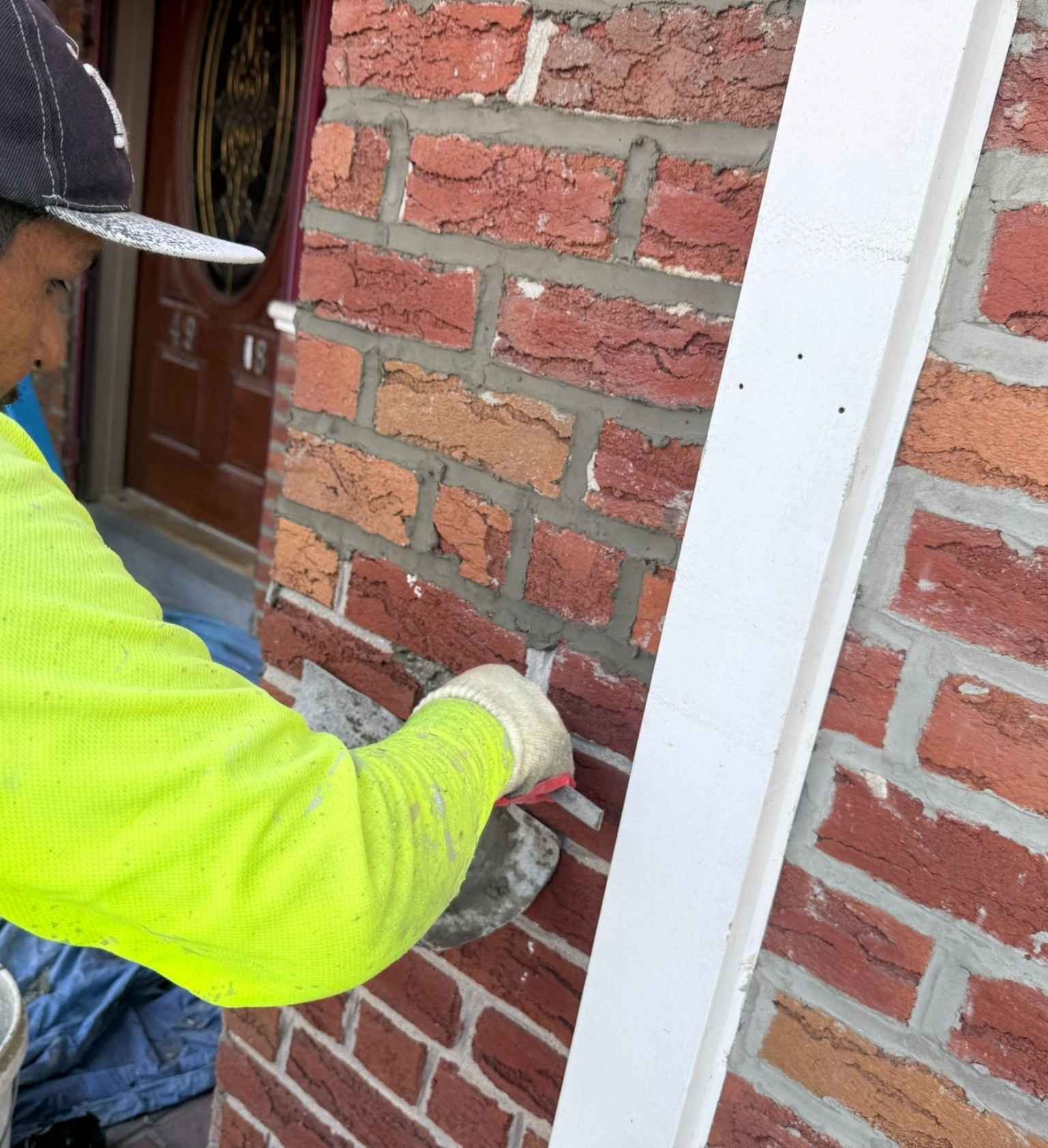
- Fill the Joints: Press mortar firmly into the joints using a pointing trowel, starting with horizontal lines before vertical ones. Pack it tightly to eliminate gaps or air pockets.
- Avoid Smearing: Keep mortar off the brick faces. If smears happen, wipe them immediately with a damp cloth before they set.
-
Step 5: Finish and Cure the Joints
- Tool the Joints: Once the mortar firms up, shape it with a jointing tool that matches the building’s style, like concave, weatherstruck, or recessed. This compression helps shed water and increases strength.
- Brush the Surface: Use a soft brush to gently blend the fresh mortar with the old brickwork. This creates a consistent, finished look without disturbing the joints.
- Clean and Cure: Allow the mortar 24–48 hours to cure. Clean the surface with a mild acidic solution, rinse thoroughly, and shield the wall from heavy rain while it hardens fully.
Preserving Bronx Brickwork for the Future
Repointing is a process of both maintaining and preserving your brickwork. If done correctly, it strengthens your brick walls, keeps moisture out, and maintains the historic character the Bronx is known for. Whether you’re handling a small repair yourself or hiring professionals, understanding each step ensures your building gets the care it deserves and stands strong for years to come.
Local experts in Bronx brick repointing combine traditional techniques with modern materials to ensure structural integrity while maintaining historical accuracy. Their work protects buildings from water damage, erosion, and wear caused by harsh weather conditions.
Contact Us
Today


I recently had an AC unit installed by GB heating and cooling , The team was prompt, arriving exactly on time, and took the time to explain the installation process in detail.
The technicians were not only highly skilled but also respectful of my home, ensuring everything was clean and tidy once the installation was complete. They worked efficiently, and the installation was completed quicker than I expected, without any compromise on quality.
What really impressed me was their attention to detail. They made sure the unit was installed perfectly, optimizing its performance and ensuring that it was placed in the best location for maximum efficiency. They even walked me through how to operate the system, answering all my questions patiently.
Since the installation, the AC has been working flawlessly, keeping my home cool and comfortable. The difference in air quality and temperature control is remarkable. I also appreciate that the team followed up a few days later to check in and ensure everything was working as it should.
Overall, I highly recommend GB heating and cooling for anyone in need of AC installation. Their combination of expertise, professionalism, and customer service is truly top-notch. I couldn’t be happier with the outcome!


Our Services Areas
Our Service Areas We proudly serve homeowners, contractors, and property managers across multiple cities and regions. Whether you're looking for expert brick repointing, chimney repairs, or historical masonry restoration, our team is equipped to deliver high-quality, dependable service—right where you need it. Check below for our current service areas. We're always expanding!